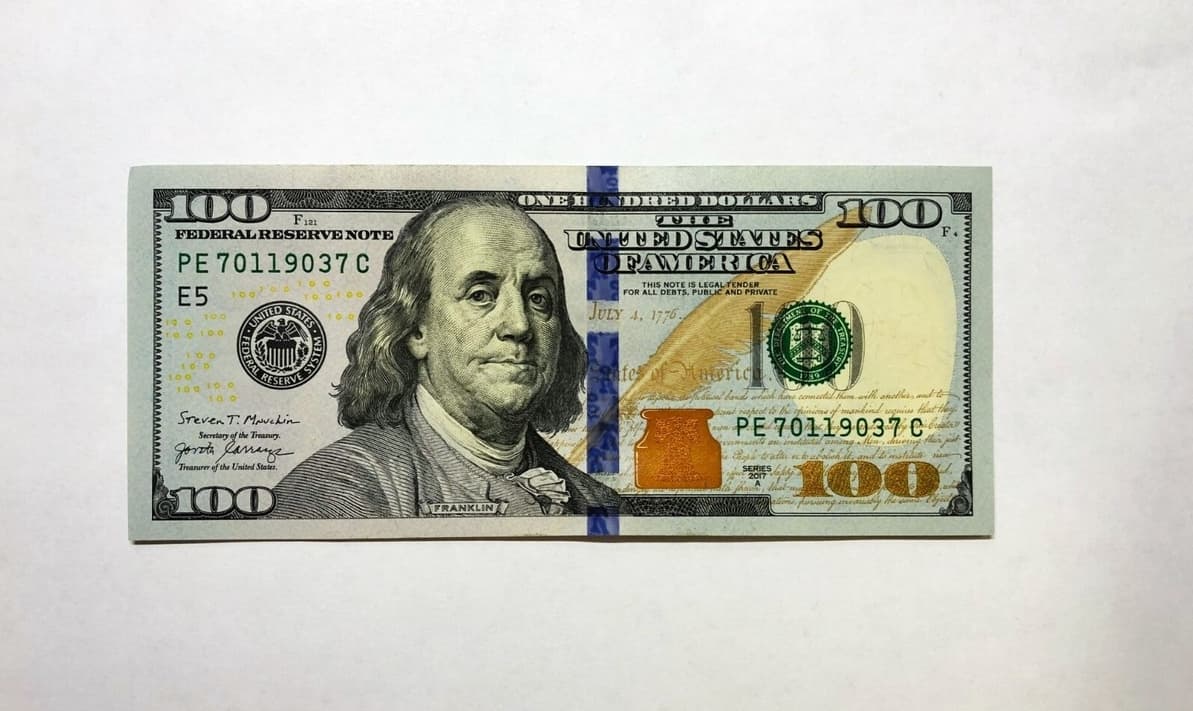
How to Start Investing With Your First $100
You don't need thousands of dollars to start. Here's exactly how to turn your first $100 into a real, working investment account, step by step.

The biggest myth in investing is that it requires real money to begin. It doesn't. It requires an account, a plan, and the discipline to keep adding to it. $100 is enough to open every door that matters.
Why $100 Is Enough to Start
A decade ago, this myth had some truth to it. Buying a single share of a $300 stock meant you needed $300. That constraint has mostly disappeared because of two changes: zero-commission trading at most major brokers, and fractional shares, which let you buy a dollar amount of a stock or fund instead of a whole share.
With fractional shares, $100 into a fund trading at $450 a share buys you roughly 0.22 shares. You own a real, proportional slice of everything that fund holds, growing and paying dividends exactly like a full share would, just smaller.
Where to Put Your First $100
For a first contribution, resist the urge to build a complicated portfolio. One well-chosen fund does more good than five overlapping ones.
A broad index fund is the simplest, most diversified option available. A single S&P 500 or total-market fund gives you a slice of hundreds of companies across every major sector, instantly. Our comparison of the best-performing index funds breaks down the handful that come up again and again for exactly this reason.
Individual stocks, even well-known blue chips, concentrate your risk in one company's fortunes. That's a reasonable choice later, once you have a diversified core and want to add a specific conviction on top of it. It's a much riskier way to spend your very first $100, when a single bad quarter from one company could sour you on investing altogether.
The Step-by-Step Process
- Choose a brokerage. Look for no account minimum, no monthly maintenance fee, zero-commission trading, and support for fractional shares. Most major online brokers meet all four criteria today.
- Open the account. This takes ten to fifteen minutes online: personal details, a short risk-tolerance questionnaire, and a linked bank account.
- Fund it with your $100 through a standard bank transfer.
- Choose one broad index fund rather than splitting the $100 across several holdings that all move together anyway.
- Place the order, specifying a dollar amount rather than a share count if your broker supports fractional shares.
- Set up a recurring contribution, even if it's small, so this $100 becomes the first deposit in an ongoing habit rather than a one-time experiment. Our guide to dollar-cost averaging explains why automating that habit matters more than the size of any single contribution.
What to Watch Out For
Before the list: the SEC's investor.gov publishes a fee analyser showing what even small recurring account charges compound to over decades, which is the mistake below that costs the most on a small balance.
A few small mistakes can undo the good of getting started at all:
- Letting the $100 sit in cash inside the brokerage account instead of actually being invested. Opening the account is step one; buying the fund is the step that matters.
- Chasing whatever stock is trending that week. A first investment built around a hot tip is a gamble, not a plan.
- Paying account fees that outweigh the amount invested. A $5 monthly maintenance fee is enormous relative to a $100 balance; make sure the broker you pick doesn't charge one.
- Checking the balance every day. At this size, day-to-day moves are noise. The goal is the tenth and hundredth contribution, not the first day's return.
Which account type, before which fund
One decision matters more than the fund choice and is almost always skipped: which kind of account you open.
A standard taxable brokerage account is the flexible option. You can withdraw any time, and you owe tax on dividends and on gains when you sell.
A retirement account - a Roth IRA or traditional IRA in the US, or the equivalent tax-advantaged wrapper wherever you live - shelters that growth, often entirely. The trade is access: the money is meant to stay until retirement, and taking it out early usually triggers penalties.
For a genuinely first $100 that you might need back within a year or two, the taxable account is the honest answer. For money you are confident you will not touch, the tax-advantaged wrapper is worth tens of thousands of dollars over a working life - the same fund, in a better container. Our comparison of Roth and traditional IRAs walks through which one fits which situation.
What $100 a month actually becomes
The first $100 is not the point. The schedule is.
At a 7% average annual return - roughly the long-run real-ish figure people use for a diversified equity portfolio, though no year ever delivers exactly that - contributing $100 every month works out to approximately:
| After | Total contributed | Approximate value |
|---|---|---|
| 5 years | $6,000 | ~$7,200 |
| 10 years | $12,000 | ~$17,300 |
| 20 years | $24,000 | ~$52,000 |
| 30 years | $36,000 | ~$122,000 |
Notice the shape. Over five years you have barely beaten what you put in. Over thirty, roughly two thirds of the balance is growth rather than contribution. That crossover is the entire argument for starting early with a small amount rather than waiting until you can start with a large one.
These are illustrations, not forecasts. Real returns arrive unevenly, with losing years mixed in, and the sequence matters.
Where this leaves you
$100 will not make you rich by itself, and nobody should pretend otherwise. What it does is prove to yourself that investing is mechanically simple: open an account, buy a diversified fund, keep adding to it.
The habit built on that first $100 is worth far more, over time, than the $100 itself - and the table above is why. Nothing in it requires skill. It requires only that you keep going for long enough that the compounding stops being theoretical.
Not investment advice. Investing involves risk, including possible loss of principal.